
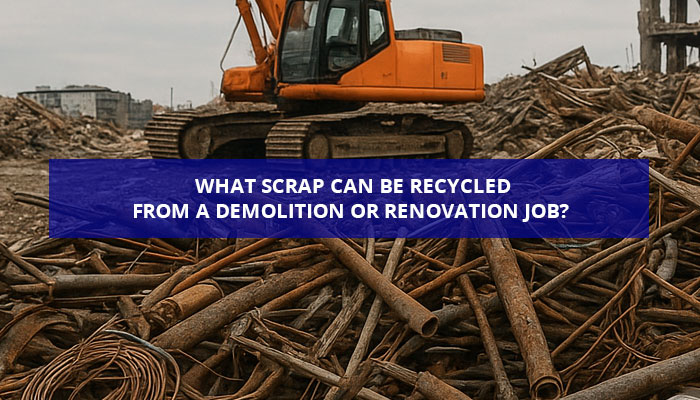
Demolition and renovation projects naturally create a lot of waste. While many assume this waste ends up in landfill, the reality is that much of it—particularly the metal—can be salvaged, sorted, and sold. Whether you’re a builder, contractor, or homeowner tackling a major remodel, knowing what materials can be recycled can lead to significant cost savings, reduce your environmental footprint, and add another layer of professionalism to your work.
Construction and demolition waste makes up a large portion of total landfill across Australia, and the metal component of that waste is both highly recyclable and valuable. If you’re not already separating and selling your scrap metal, you’re likely throwing away money.
This article outlines the types of scrap you can recover from a demolition or renovation job, why it’s worth recycling, and how to incorporate better waste management into your project workflow.
Understanding the Value of Scrap Metal
Scrap metal from demolition and renovation jobs comes in all shapes and sizes. From the frame of an old building to the copper wiring in the walls, metal is everywhere. Many people see it as junk, but the truth is that these materials have ongoing value in the recycling market.
Steel, copper, aluminium, brass, stainless steel, and even old lead fixtures can be recovered, processed, and re-used in manufacturing. Not only does this reduce the environmental impact of mining and production, but it also puts money back into your pocket. And the best part is—you’re already handling these materials on-site. All that’s needed is a smarter approach to separating and disposing of them.
Common Recyclable Scrap from Demolition and Renovation Sites
Steel and Iron
These are among the most common materials found on construction and demolition sites. You’ll see them in structural beams, reinforcing bars, pipes, brackets, and roofing supports. Even if the material is rusted, bent, or covered in concrete dust, steel and iron remain highly recyclable.
During demolition, separating these materials early in the process makes handling easier. Removing bolts, screws, and mixed materials improves the scrap’s quality and potential resale value.
Copper
Copper is arguably the most valuable scrap metal found on-site, and it’s surprisingly abundant in older homes and buildings. You’ll find copper in electrical wiring, hot water pipes, switchboards, roofing components, and air conditioning systems.
Even small offcuts of copper can add up in value. If you strip insulation from copper wires, the price per kilogram increases, as clean copper is more desirable to buyers. It’s worth assigning a dedicated space on-site for collecting copper offcuts, pipework, and fittings.
Aluminium
Lightweight but strong, aluminium is commonly found in window and door frames, gutters, cladding, and shed roofing. During renovations, entire sections of aluminium may be removed and can be easily stacked and sorted.
Unlike steel, aluminium doesn’t rust, which makes it ideal for reuse and attractive to recyclers. Even if it’s painted or coated, aluminium is still recyclable and generally holds a stable value.
Stainless Steel
Used in everything from kitchen sinks to balustrades and appliance housing, stainless steel is durable and corrosion-resistant. It is commonly found in commercial renovations, hospitality refurbishments, and fit-out demolitions.
Stainless steel tends to be heavier than it looks, so what may appear to be a small pile of fittings can actually add up to a decent payday. It’s worth checking any older kitchens or bathrooms for items made from this metal.
Brass
While less common than steel or aluminium, brass is still frequently found in plumbing systems, light fittings, doorknobs, and decorative elements in older buildings. It is easy to overlook, but brass has a relatively high resale value.
Plumbers working on-site during renovations can often recover small brass components without much extra effort. Collecting them in a separate container makes sorting easier and ensures you don’t lose them among heavier scrap.
Lead
Older homes and buildings, particularly those built before the 1980s, may still contain lead in the form of flashing, pipes, or jointing materials. While lead is toxic and must be handled carefully, it is recyclable and still holds market value.
Safety is critical when dealing with lead. If you’re unsure, always wear gloves and a mask, and consult a specialist recycler who can handle lead in accordance with environmental guidelines.
Why Recycle Scrap Metal?
Recycling scrap metal is more than just a way to declutter your worksite. It brings tangible financial and environmental benefits.
Reducing Landfill Waste
Australia produces millions of tonnes of construction and demolition waste every year. A large portion of that is metal. By recycling scrap metal, you’re directly reducing the amount of waste sent to landfill, which helps local councils manage waste volumes and preserves valuable landfill space.
Lowering Disposal Costs
Every skip bin and rubbish haulage service comes with a price tag. The heavier the load, the more you pay. Metal waste is dense and can quickly increase disposal fees. By removing metal and recycling it separately, you’ll cut back on overall disposal costs while also earning money from the materials you sell.
Conserving Natural Resources
Recycling scrap metal uses significantly less energy than producing new metal from raw materials. For example, recycling aluminium saves up to 95% of the energy required to produce it from bauxite. By recycling instead of tossing metal waste, you help preserve natural resources and reduce the environmental cost of mining and refining new metal.
Supporting the Circular Economy
Every kilogram of recycled metal that re-enters the manufacturing supply chain reduces the demand for virgin materials. This is especially important in sectors like construction, where the demand for materials is constant. Your scrap metal becomes part of a circular system—used, reclaimed, and re-used—rather than a linear process that ends in a landfill.
Incorporating Scrap Metal Recycling into Your Workflow
The key to successful scrap metal recycling is planning. Waiting until the end of a job to sort through waste is inefficient and makes recovery more difficult.
1. Start Early
Before demolition begins, take a walk-through and identify areas where valuable metals are located—kitchens, bathrooms, service panels, roofing, and structural supports. Knowing what’s there helps you plan how to remove and separate it.
2. Set Up Collection Zones
Designate separate areas or bins for different types of metal—steel, copper, aluminium, brass, etc. Make sure the team knows what goes where. If you’re working on a large-scale demolition, consider hiring labelled scrap bins to keep things organised.
3. Educate Your Team
Get your crew on board. A short briefing at the start of the job can explain the value of recycling, how to sort properly, and why it’s worth taking the time. When everyone understands the benefits, sorting becomes a natural part of the work routine.
4. Work with a Trusted Recycler
Not all recyclers are the same. Choose a licensed, reliable scrap metal recycler that offers fair pricing and easy collection or drop-off options. A good recycler will guide you through best practices for sorting and may even provide bins or collection containers.
Final Thoughts
There’s a lot of value hiding in demolition and renovation waste. What many consider rubbish can actually become a source of income and a major cost-saving opportunity. Scrap metal is everywhere—inside walls, under floors, and on roofs. By recovering and recycling it, you not only reduce waste and help the environment, but also put money back into your project or business.
If you’re in the demolition or renovation game and want to make the most of your scrap, don’t wait until the end of the job to think about recycling. Plan early, sort as you go, and partner with a trusted metal recycler who can help you make the most of every piece of metal on site.
Contact Antiskid Today
Call Allied Metal Recyclers today on (08) 6272 2000 to find out how we can help you turn your demolition or renovation scrap into profit. We offer competitive pricing, easy drop-off and collection services, and expert advice tailored to the building and construction industry.
