
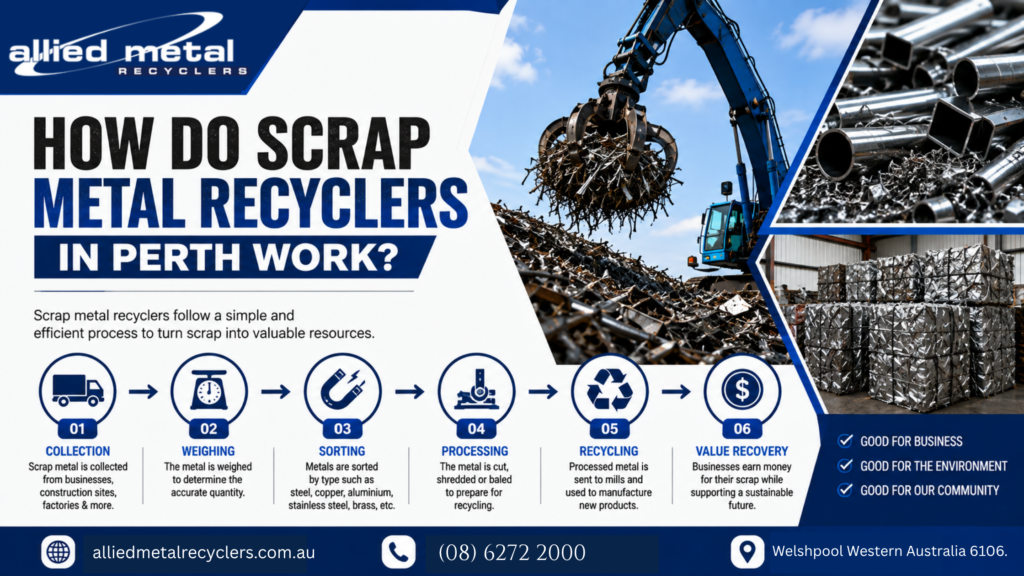
Scrap metal recyclers in Perth collect, sort, clean, process, and prepare scrap metal for reuse or export. The scrap metal recycling process typically includes sorting, shredding, melting, refining, shaping, and packaging. Reputable commercial metal exporters in WA help businesses move processed metals into local and international markets while supporting resource conservation, reducing waste, and creating economic value.
Scrap metal plays a vital role in modern industries, offering both environmental and economic benefits. As global demand for raw materials increases, businesses are increasingly opting for recycling as a cost-effective, cash-earning and eco-conscious solution.
From construction sites to manufacturing units, scrap metal is generated in large volumes. They need proper handling to unlock their full value. Understanding how it is processed, from collection to export, helps businesses make more informed decisions.
Let’s find useful details to gain a deeper understanding of the journey a piece of scrap metal takes before finding new applications.
1. Collection of Scrap Metal
The journey begins with the collection of scrap metal from various sources:
- Industrial sites.
- Construction and demolition projects.
- Manufacturing units.
- Households and commercial facilities.
Collection methods vary depending on volume. Large Perth metal recyclers often use scheduled pickups, while smaller quantities may be delivered directly to nearby recycling facilities.
This step is especially important for businesses working with commercial metal exporters in WA to ensure consistent supply chains.
2. Sorting and Segregation
Once collected, the next step is to sort the scrap by type and quality. This is a crucial stage in scrap metal recycling, as proper segregation directly influences pricing and usability.
Common sorting methods include:
- Magnetic separation for ferrous metals.
- Manual sorting for non-ferrous materials.
- Advanced sensor-based systems for precision.
Proper sorting ensures that each type of metal can be processed efficiently and meets industry standards. It helps scrap sellers get better cash in return. So when you decide to sell scrap metals to WA recyclers, sort them.
3. Cleaning and Preparation
Before processing, scrap metal must be cleaned to remove contaminants such as the following:
- Plastic.
- Rubber.
- Labels or markings.
- Dirt or debris.
- Oil or greasy substances.
- Chemicals.
Clean and well-prepared materials are often preferred by commercial metal exporters in WA for efficient processing and export.
4. Shredding and Size Reduction
After cleaning, the scrap is shredded into smaller pieces. This step is essential for:
- Improving handling and transportation.
- Increasing surface area for faster melting.
- Enhancing processing efficiency.
Shredding allows large metal items to be broken down into manageable sizes. It significantly streamlines and eases the entire recycling process.
5. Melting and Refining
The shredded metal is then melted in high-temperature furnaces. Different metals melt at different melting points. Advanced technologies and tools are used by total metal recyclers like Allied Metal Recyclers to ensure energy efficiency.
During this phase:
- Impurities are separated.
- Chemical composition is adjusted.
- Quality is refined to meet industry standards.
This step actually converts scrap metal into a reusable raw material, preparing it for the next stage, where reshaping takes place.
6. Shaping and Forming
After refining, the molten metal is shaped into specific forms depending on its intended use. This is a vital stage in the metal and scrap recycling process. It prepares the material for manufacturing and export.
Common shaping methods include:
- Casting into moulds: The molten metal is poured into moulds to create standard shapes like ingots or billets. This makes transportation and further processing easier.
- Rolling into sheets or bars: Metal is flattened or elongated into usable industrial forms. These forms are popularly used in construction and manufacturing.
- Custom shaping: Metal can be shaped into specific components based on industry requirements. This adds flexibility and increases its commercial value.
7. Packaging and Storage
Proper packaging standards are essential when dealing with commercial metal exporters in WA to meet transportation and export requirements.
Before export or distribution, processed metal is:
- Compressed into bales.
- Packed securely for transport.
- Stored in designated facilities.
8. Export and Global Distribution
The final stage involves transporting processed metal to international markets. WA recyclers working with commercial metal exporters benefit from streamlined logistics and access to global buyers.
Exporting scrap metal helps:
- Meet global demand for recycled materials.
- Support international manufacturing industries.
- Generate extra revenue for businesses.
Efficient export systems ensure that recycled metal reaches the right markets at the right time.
Benefits of Scrap Metal Processing
Processing scrap metal offers several key advantages
- Environmental Sustainability: Reduces landfill waste and conserves natural resources. It minimises pollution scopes by decreasing the need for raw material extraction.
- Energy Efficiency: Requires less energy compared to producing new metal. This significantly reduces overall industrial energy consumption and operational costs.
- Economic Value: Creates revenue opportunities for businesses. It also supports a growing recycling industry that contributes to job creation and local economies.
- Resource Conservation: Minimises the need for mining raw materials. This helps preserve finite natural resources for future generations.
Concluding
The journey of scrap metal, from collection to export, is a well-structured process that adds value at every stage. By understanding how metal is collected, processed, and distributed, businesses can make smarter decisions and improve operational efficiency.
Partnering with one of the best premier metal recyclers like Allied Metal Recyclers ensures that your materials are handled professionally, ethically, and profitably. With expertise in metal and scrap recycling, they help businesses turn waste into a valuable asset, and that too, sustainably!
FAQs
Q. What happens to scrap metal after collection?
Ans: It is sorted, cleaned, shredded, melted, and then reshaped into reusable materials through efficient metal and scrap recycling processes for manufacturing or export.
Q. How is scrap metal sorted in recycling facilities?
Ans: It is sorted using magnets for ferrous metals, manual separation, and advanced sensor-based technologies.
Q. Why is sorting important in metal and scrap recycling?
Ans: Proper sorting improves material quality, increases value, and ensures efficient recycling.
Q. What machines are used to process scrap metal?
Ans: Common machines include shredders, crushers, magnetic separators, and high-temperature furnaces.
Q. Who exports scrap metal from Western Australia?
Ans: Allied Metal Recyclers and a few other reputed metal recyclers export scrap metal from Perth, WA. These businesses are renowned as the most trusted commercial metal exporters in WA.
Q. What types of scrap metal are most commonly exported?
Ans: Ferrous metals such as steel and non-ferrous metals such as aluminium and copper are widely exported.
Q. Where can I sell scrap metal in Perth?
Ans: Reputable local scrapyards near you in Perth, such as Allied Metal Recyclers, are recommended for quick access and prompt payment.
Q. What industries use processed scrap metal?
Ans: Construction, automotive, manufacturing, and infrastructure industries heavily rely on recycled metal.
Q. What scrap metal dealers are located near Perth industrial areas?
Ans: Allied Metal Recyclers and many other popular facilities are based near Perth’s industrial zones.
Q. How long does the scrap metal recycling process take?
Ans: It can take anywhere from a few hours to several days, depending on the volume and type of metal.
