
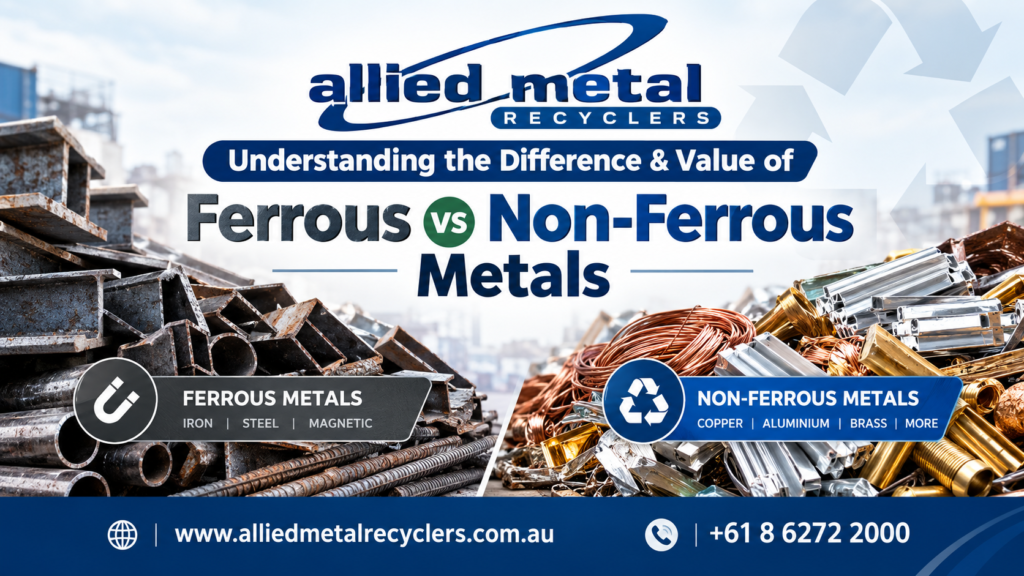
Ferrous metals contain iron and are generally strong, heavy, and magnetic. Common examples include steel, cast iron, and wrought iron. Non-ferrous metals do not contain iron and are usually lighter, more corrosion-resistant, and more valuable for recycling. Copper, aluminium, brass, zinc, and lead are common examples. Knowing the difference helps you sort scrap metals correctly, avoid contamination, and potentially receive better returns when selling to Perth metal recyclers.
Understanding the difference between ferrous and non-ferrous metals is essential for anyone involved in metal recycling. Whether you’re a homeowner clearing out old materials or a business handling industrial waste, knowing how to identify and value these metals helps you make informed decisions.
In this blog, we will learn about relevant and important facts on the topic that will help scrap metal sellers maximise their returns with a fair understanding.
What Are Ferrous Metals?
Ferrous metals are metals that contain iron, making them strong, durable, and widely used across industries.
Key Characteristics:
- High strength and durability
- Magnetic properties
- Prone to rust if not treated
Common Examples:
- Steel
- Cast iron
- Wrought iron
These metals are widely used in construction, automotive manufacturing, and infrastructure projects for their load-bearing capacity.
Value in Recycling:
Ferrous metals are more widely available, making them less expensive than non-ferrous metals. However, they remain a major component of commercial scrap metal in Perth due to the large volumes generated by industry. Perth Metal recyclers regularly process these materials from construction, manufacturing, and industrial operations.
What Are Non-Ferrous Metals?
Non-ferrous metals do not contain iron and are known for their corrosion resistance and lightweight properties.
Key Characteristics:
- Non-magnetic
- Rust-resistant
- Lightweight and flexible
Common Examples:
- Aluminum
- Copper
- Brass
- Zinc
- Lead
These metals are commonly used in electrical wiring, roofing, and consumer products.
Value in Recycling:
Non-ferrous metals are more valuable due to their rarity and properties. If you’re searching for “scrap metal near me”, you’ll notice that materials like copper and aluminium often fetch higher prices. WA recyclers handle these valuable materials and help sellers separate them according to type and grade.
Key Differences Between Ferrous and Non-Ferrous Metals
Understanding the differences can help you sort and recycle metals more effectively.
1. Composition
- Ferrous: Contains iron
- Non-ferrous: Does not contain iron
2. Corrosion Resistance
- Ferrous: Susceptible to rust
- Non-ferrous: Highly resistant to corrosion
3. Magnetism
- Ferrous: Magnetic
- Non-ferrous: Non-magnetic
4. Weight and Strength
- Ferrous: Heavier and stronger
- Non-ferrous: Lighter and more flexible
5. Value
- Ferrous: Lower value
- Non-ferrous: Higher value in recycling markets
Why Does Metal Sorting Matter?
Sorting metals correctly is essential for maximising value and efficiency in recycling.
Benefits of Proper Sorting:
- Higher resale value
- Faster processing
- Reduced contamination
Businesses handling bulk waste, especially commercial scrap metal in Perth, can significantly improve profitability by properly separating metals. Total metal recyclers commonly work with sorted materials to streamline processing and improve recovery.
Environmental Benefits of Recycling Metals
Recycling metals has a major positive impact on the environment.
Key Benefits:
- Reduces landfill waste
- Conserves natural resources
- Lowers carbon emissions
- Saves energy
Industries that choose dealers for commercial scrap metal in Perth also contribute to a more sustainable and eco-friendly waste management system. Choosing established Perth Metal recyclers can further support responsible recovery and reuse.
How to Identify Ferrous vs Non-Ferrous Metals?
Correct identification is crucial for effective recycling.
Simple Identification Methods:
- Magnet Test
- Sticks – Ferrous
- Doesn’t stick – Non-ferrous
- Visual Inspection
- Rust – Likely ferrous
- Clean/shiny – Likely non-ferrous
- Weight & Colour
- Aluminium: Light
- Copper: Reddish
- Steel: Heavy and dull
If you’re dealing with bulk metal scrap, working with premier metal recyclers who can handle commercial scrap metal in Perth can make identification and sorting much easier. Authorities marked as star scrap metals serve customers with different scrap metal requirements.
Tips to Maximise Scrap Metal Value
To get the best returns from your scrap metals:
- Separate ferrous and non-ferrous metals
- Clean materials before selling them.
- Monitor current scrap metal prices
- Store metals properly
- Choose reliable recyclers
These practices are especially useful when searching for scrap metal near me, helping you identify the best local buyers. When comparing Perth scrap metal services, consider pricing, accepted materials, collection options, and recycling practices.
Applications of Ferrous and Non-Ferrous Metals
Understanding where these metals are used helps identify valuable scrap metals.
Ferrous Metal Uses:
- Construction frameworks
- Machinery
- Vehicles
Non-Ferrous Metal Uses:
- Electrical wiring
- Packaging (cans)
- Plumbing
Recognising these applications can help businesses and individuals working in commercial scrap metal in Perth identify high-value materials more efficiently. Experienced WA recyclers can also help identify and separate different materials before processing.
Factors That Affect Scrap Metal Prices
Several factors influence how much your scrap metal is worth:
Key Factors:
- Market demand
- Type of metal
- Purity and cleanliness
- Quantity available
- Location
Being aware of these factors helps you sell at the right time and get better returns. Local Perth Metal recyclers may also assess the grade, quantity, and condition of materials before providing a final price.
Common Mistakes to Avoid in Scrap Metal Recycling
Avoiding common mistakes can improve your profits:
- Mixing metal types.
- Not cleaning scrap metals.
- Ignoring small, valuable items.
- Not comparing prices.
- Choosing unreliable dealers.
Staying informed helps you avoid losses and improve efficiency. Comparing different Perth scrap metal buyers can also help you understand available services and pricing.
Conclusion
Understanding ferrous vs non-ferrous metals is essential for making informed recycling decisions. Whether you’re an individual or a business involved in metal recycling, proper identification, sorting, and timing can significantly impact your returns.
By applying the right strategies and working with trusted services, you can turn Perth scrap metal into liquid cash. Also, supporting a cleaner and more sustainable environment with your choice.
FAQs
Q. What is the main difference between ferrous and non-ferrous metals?
Ans: Ferrous metals contain iron and are usually magnetic, while non-ferrous metals do not contain iron and are typically non-magnetic and more corrosion-resistant.
Q. Where can I sell scrap metal in Perth?
Ans: You can sell to local scrap metal recycling yards, dealers, or companies that offer pickup services for commercial quantities and metal recycling solutions. Perth Metal recyclers can handle different types of materials depending on their facilities.
Q. How can I quickly identify ferrous metals?
Ans: Use a magnet; only ferrous metals will react.
Q. Why do ferrous metals rust?
Ans: Ferrous metals contain iron, which reacts with oxygen and moisture to form rust (iron oxide).
Q. Where are non-ferrous metals commonly used?
Ans: They are widely used in electrical wiring, roofing, plumbing, and electronics due to their lightweight and corrosion resistance.
Q. Why is metal recycling important?
Ans: Recycling commercial scrap metal in Perth helps conserve natural resources, reduces energy consumption, and minimises environmental pollution.
Q. Which metals are more valuable in scrap metal recycling?
Ans: Non-ferrous metals like copper and aluminium are generally more valuable due to their scarcity and higher demand.
Q. Where can I sell scrap metal for the best price in Perth?
Ans: Sell to reputable scrap metal yards like Allied Metal Recyclers that offer competitive rates, bulk pricing, and transparent weighing. For better returns, consider providers specialising in commercial scrap metal in Perth. You can also compare local Perth scrap metal services based on pricing, convenience, and accepted materials.
Q. What metals can be recycled for money?
Ans: Copper, aluminium, brass, stainless steel, lead, and even some electronic metals can be recycled for cash through professional metal recycling services.
Q. Do I need an ID to sell scrap metal in WA?
Ans: Yes, in Western Australia, you typically need a valid ID to sell scrap metal due to regulations aimed at preventing theft.
