
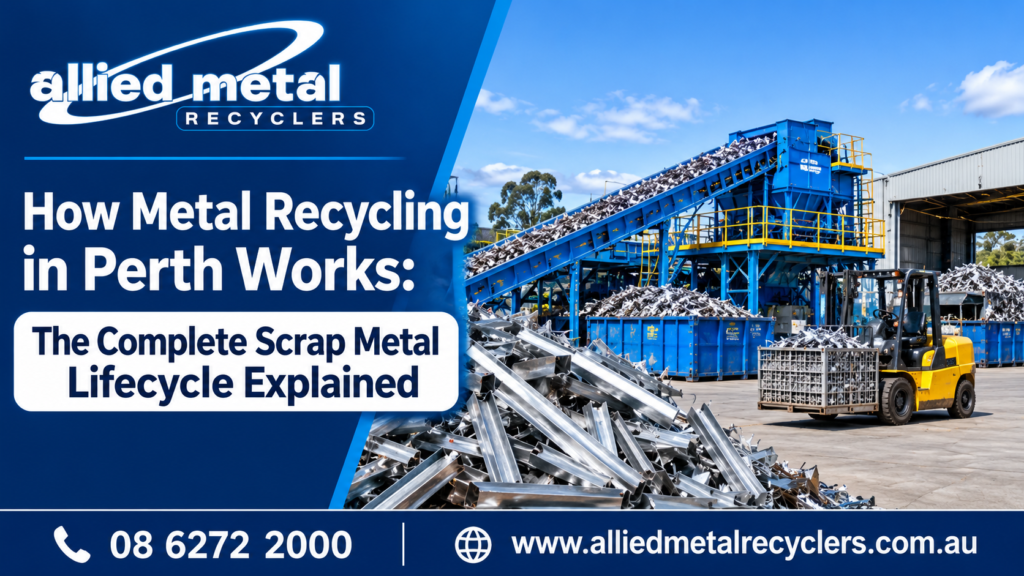
Construction and industrial sectors generate large volumes of metal waste every day. Managing this waste efficiently is essential for both environmental and economic reasons.
Understanding metal recycling in Perth helps local businesses and individuals make informed decisions about disposal and reuse while supporting sustainable practices.
What Is Metal Recycling?
Metal recycling is the process of collecting, processing, and reusing metal materials that would otherwise be discarded. It plays a vital role in reducing landfill waste and conserving natural resources.
By working with professional metal recyclers in Perth, businesses can ensure that scrap materials are handled responsibly and efficiently.
Key benefits include the following:
- Reduced environmental impact.
- Conservation of natural resources.
- Lower energy consumption.
- Cost savings for businesses.
- Generates extra revenue.
Stage 1: Collection and Transportation
The first stage in the lifecycle involves collecting scrap metal from various sources. These may include:
- Construction sites.
- Demolition projects.
- Industrial facilities.
- Residential areas.
Once gathered, the materials are transported to recycling facilities. Efficient collection systems are essential for streamlining scrap metal recycling and reducing handling time.
Proper logistics ensure that materials reach the recycling centre safely and without contamination.
Stage 2: Sorting and Separation
After collection, the scrap metal is sorted based on type and quality. This step is crucial because different metals require different recycling processes.
Common categories include:
- Ferrous metals (steel, iron).
- Non-ferrous metals (aluminium, copper).
Advanced technologies used in this stage:
- Magnets for ferrous metals.
- Sensors for precise identification.
- Manual inspection for quality control.
This ensures that the recycling process remains efficient and produces high-quality outputs.
Stage 3: Processing and Shredding
Once sorted, the metal is processed into smaller, manageable pieces. This stage includes:
- Shredding large metal items.
- Crushing bulky materials.
- Removing visible impurities.
Processing helps prepare materials for melting and improves efficiency. This stage is a key part of metal recycling in Perth. It ensures consistency in further processing.
Stage 4: Melting and Purification
The processed metal is then melted in specialised furnaces designed for different types of metals.
Key steps include:
- Heating metals to specific melting points.
- Removing impurities during melting.
- Refining material for reuse.
High-quality purification is essential for effective scrap metal recycling, especially when the materials are reused in construction or manufacturing.
Stage 5: Solidification and Manufacturing
After purification, the molten metal is cooled and solidified into usable forms, such as:
- Bars.
- Sheets.
- Rods.
These materials are then supplied to manufacturers for reuse.
Industries that rely on recycled metals include:
- Construction.
- Automotive.
- Manufacturing.
- Packaging.
Many businesses depend on metal recyclers in Perth to supply these materials consistently.
Environmental and Economic Benefits
Metal recycling offers both environmental and financial advantages.
Environmental benefits:
- Reduced need for mining.
- Lower greenhouse gas emissions.
- Less landfill waste.
Economic benefits:
- Job creation in the community or locale.
- Reduced waste disposal costs.
- Steady supply of raw materials.
Challenges in Metal Recycling
Despite its benefits, metal recycling comes with challenges such as the following:
- Contamination of materials.
- Improper sorting.
- Fluctuating market demand.
Local businesses that understand the nuances of metal recycling in Perth are better equipped to overcome these challenges.
The knowledge supports maximising the value of their scrap materials.
The Future of Scrap Metal Recycling
The future of recycling is focused on innovation and sustainability.
Emerging trends include:
- Advanced sorting technologies.
- Automation in processing.
- Data-driven recycling systems.
As demand grows, scrap metal recycling will continue to support circular economies and reduce environmental impact.
Conclusion
Understanding the lifecycle of recycled metal provides valuable insight into how waste can be transformed into useful resources. From collection to manufacturing, each step plays a vital role in ensuring efficiency and sustainability.
By supporting metal recycling in Perth, businesses and individuals contribute to a cleaner environment, a circular economy and a more resource-efficient future.
FAQs
Q. How do scrap metal dealers pay?
Ans: Scrap metal recyclers in Perth typically pay you based on the type of metal, weight, and current market price. They accept multiple payment methods, including cash on-site.
Q. Why is metal recycling important?
Ans: Scrap metal recycling helps reduce landfill waste, conserves natural resources, and lowers energy consumption. All these are essential parts of sustainable waste management.
Q. What types of metals can be recycled?
Ans: Common metals include steel, aluminium, copper, and iron.
Q. How are metals sorted during recycling?
Ans: They are separated using magnets, sensors, and manual inspection based on type and quality.
Q. Is recycling metal cost-effective?
Ans: Yes, scrap metal recycling is cost-effective as it reduces production costs and provides valuable raw materials for various industries.
Q. How do I find reliable recycling services?
Ans: Look for experienced providers with proper facilities and industry compliance.
Q. Can contaminated metal be recycled?
Ans: Yes, but it requires additional processing to remove impurities.
Q. What industries use recycled metal?
Ans: Construction, automotive, manufacturing, and packaging industries widely use recycled metals.
Q. Does recycling metal save energy?
Ans: Yes, scrap metal recycling uses significantly less energy compared to producing new metals from raw materials. It makes it highly efficient and environmentally friendly.
Q. What is the future of metal recycling?
Ans: It involves advanced technologies, automation, and a stronger focus on sustainability, making recycling faster, more efficient, and more environmentally friendly.
